
The mobile app development technologies 2026 is bringing forward include artificial intelligence and generative AI, edge computing, the Internet of Things, augmented, virtual and mixed reality, 5G, cloud computing, blockchain, wearable technology, voice technology, and computer vision. Together, these mobile app development tools are changing how apps are built, how fast they respond, and how personal they feel to each user.
Key Takeaways
Artificial intelligence and generative AI now shape app personalisation and how the code itself gets written.
Edge computing and 5G together cut the delay between a user's action and an app's response.
Augmented reality (AR), virtual reality (VR) and mixed reality (MR) are moving from gaming into retail, training and healthcare.
Internet of Things (IoT) devices depend on mobile apps as their main control point, from smart homes to fitness trackers.
Blockchain and cloud computing support secure data handling and flexible app scaling behind the scenes.
Wearable technology, voice technology and computer vision widen how people interact with apps beyond a touchscreen.
Anyone building or commissioning an app in 2026 is choosing from a growing set of mobile app development technologies. Some of the latest mobile app development technologies, such as generative AI and edge computing, have moved from experiment into standard practice within a year or two. Others, like blockchain and mixed reality, are still finding their place.
Mobile App Development Technologies Shaping 2026
Artificial Intelligence and Generative AI in Mobile Apps
Artificial intelligence in mobile apps now covers far more than recommendation engines. Generative AI in mobile app development writes draft code, generates images inside creative apps, and powers AI-powered mobile applications that hold a natural conversation with users. Machine learning sits underneath most of this, learning from behaviour to adjust what an app shows next.
Edge Computing
Edge computing moves processing away from a distant server and onto the device itself. This cuts the delay between an action and a response, useful for a fitness app counting steps or a navigation app rerouting a driver in real time.
Internet of Things (IoT)
Internet of Things (IoT) devices, from smart thermostats to fitness bands, rely on a mobile app as their main point of control. As more households add connected devices, apps need to manage several at once without becoming confusing.
Augmented Reality, Virtual Reality and Mixed Reality
Augmented reality (AR) overlays digital elements onto a live camera view, suiting furniture placement or make-up try-on apps. Virtual reality (VR) replaces the view entirely, fitting training simulations and gaming. Mixed reality (MR) blends both, letting digital objects interact with the physical space around the user.
5G Connectivity
5G networks carry more data with less delay than previous generations, supporting live video, cloud gaming and real-time data sharing. As more regions roll out coverage, apps that depend on fast, stable connections become viable for a wider audience.
Cloud Computing
Cloud computing lets an app store data and run processing outside the device, keeping the app light. It also keeps a user's data in sync across their phone, tablet and desktop.

Related Services
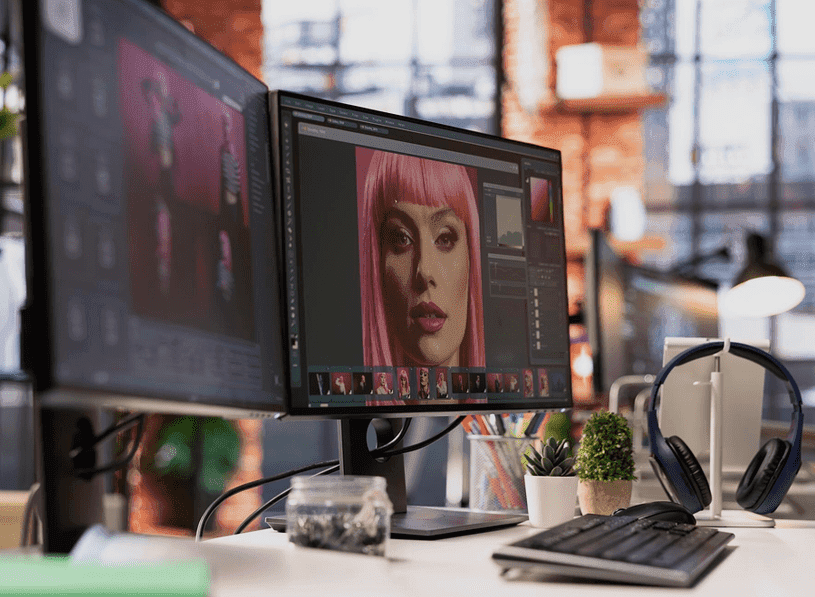
AI Video Creation turns a script, a product photo or a simple idea into a finished video, using tools that handle filming, voice and editing work that used to take a full crew.

Graphic design is the work of turning a brand's ideas into visuals people actually notice, from social posts to packaging, built to look right wherever it's seen.

A logo is usually the first element people notice about a business, and it needs to say loud & clear about what your brand or company is.
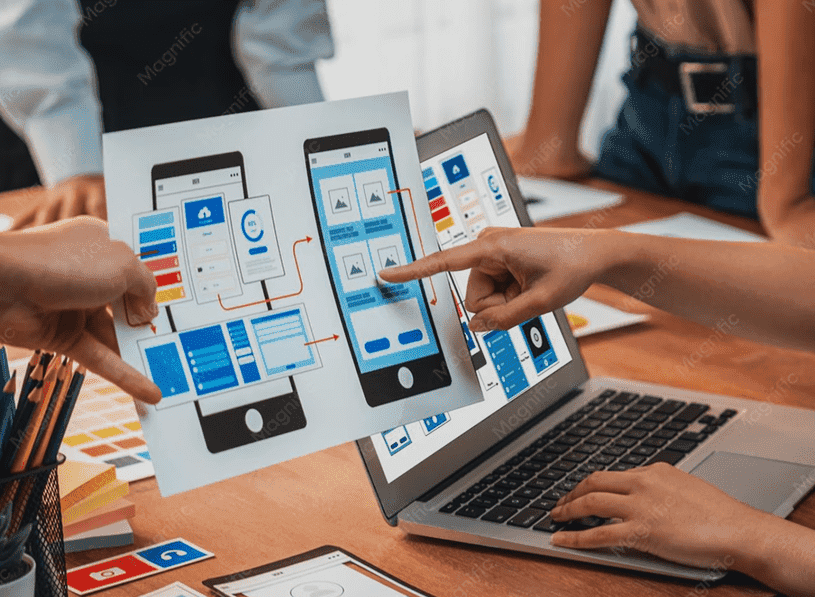
Mobile app development is the process of turning an idea into a working app, built with the right features, a smooth design and the technical groundwork to actually perform smoothly.

