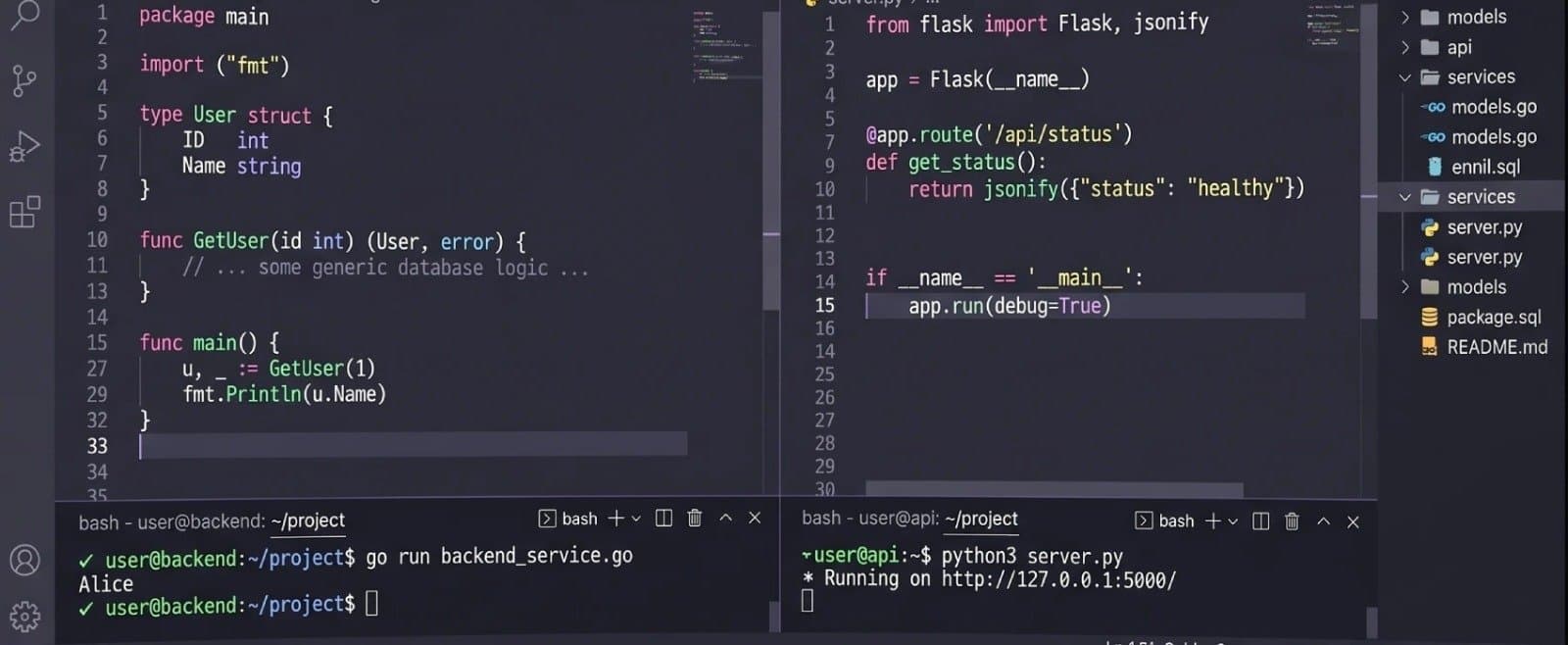
The best backend languages for 2026 are JavaScript (through Node.js), Python, Java, Go, PHP, C#, and Ruby. Each of these backend languages for web development can be a good fit depending on the project requirements, team size, and development needs. JavaScript keeps its lead through wide adoption and shared front-end skills, Python continues to grow through frameworks such as Django and Flask, and Go is gaining ground for microservices and cloud-native projects. The right choice depends on your project's scale, your team's existing skills, and how the application will be deployed.
Key Takeaways
JavaScript remains the most widely used backend language, largely because teams can share code and skills between the front end and the back end.
Python continues to grow in popularity, helped along by its use in data-heavy and AI-adjacent backend work.
Go has become a common choice for microservices and cloud deployment, thanks to fast performance and simple concurrency handling.
PHP and Ruby still power a large share of existing websites, even though newer projects choose them less regularly.
Choosing from the best backend programming languages available depends more on your team and project than on any single ranking.
Backend Languages Compared
Language | Common Use | Common Frameworks | Learning Curve |
|---|---|---|---|
JavaScript (Node.js) | Real-time apps, APIs, full-stack projects | Express, NestJS | Gentle for existing front-end developers |
Python | Web apps, data-driven backends, automation | Django, Flask | Gentle for beginners |
Java | Large enterprise systems, banking, telecom | Spring Boot | Steeper, but well documented |
Go | Microservices, cloud infrastructure, APIs | Gin, Fiber | Moderate |
PHP | Content-managed websites, e-commerce | Laravel, Symfony | Gentle |
C# | Enterprise and Windows-based systems | ASP.NET Core | Moderate |
Ruby | Startups, rapid prototyping | Ruby on Rails | Gentle |
Choosing among the many backend languages available today usually comes down to three things: what your team already knows, what your application needs to do, and how it will run once it is live. This blog explains the best backend languages 2026 has to offer, covering the ones seeing the most use, their strengths, their frameworks, and where each one fits best.
Top Backend Languages for Web Development in 2026
JavaScript (Node.js)
JavaScript is no longer limited to the browser. Through Node.js, it now handles server-side rendering, APIs, and real-time features such as chat or live notifications. Teams choose it because front-end and backend developers can share the same language, which shortens onboarding and simplifies code reviews.
Python
Python's readable syntax makes it a common starting point for new developers, and frameworks such as Django and Flask handle much of the groundwork for database integration and routing. It also suits projects that mix web development with data analysis or automation, since the same language covers both.
Java
Java has stayed a fixture inside banks, telecoms, and other large organisations that value stability over novelty. Spring Boot remains a common framework for building web servers and APIs at scale, and Java's strict typing usually catches errors earlier in development.
Go
Go was built for the kind of workloads that modern cloud systems demand: many small services talking to each other at once. It compiles into a single file, handles concurrent requests without heavy setup, and has become a regular choice for microservices and cloud deployment where speed and simplicity both matter.
Teams building APIs, background workers, or infrastructure tools regularly reach for Go once a project grows beyond what a single monolithic application can handle comfortably.
PHP
PHP still runs a large share of the web, particularly through content management systems and online stores built with Laravel or Symfony. It has a gentle learning curve and a large body of existing documentation, which keeps it a practical choice for smaller business websites.
C#
C# and the ASP.NET Core framework are common inside organisations already built around Microsoft tools. It handles enterprise workloads well and integrates smoothly with Windows-based infrastructure, which matters for teams that need that consistency.
Ruby
Ruby, mostly through Ruby on Rails, is still picked by startups that want to build and test an idea quickly. Its conventions reduce the number of decisions a new developer needs to make, which speeds up the early stages of a project.
Choosing the Right Backend Language for Your Project
A few practical questions help narrow the list of top backend languages down to a realistic shortlist:
What does your existing team already know well?
Does the project need to handle a high volume of simultaneous requests, or is traffic modest and steady?
Is the system likely to grow into a set of microservices down the line, or will one application handle the workload for now?
How will the application be hosted, and does that hosting environment favour a particular language or framework?
Is database integration a core part of the build, and does the team have experience with the databases involved?
None of these questions have a single correct answer, which is exactly why backend development technologies and backend frameworks keep evolving.
Conclusion
JavaScript and Python remain popular because they are flexible and relatively easy to learn. Go is increasingly used for microservices and cloud-based applications, while Java, C#, PHP, and Ruby continue to be used in projects that align with existing systems and requirements. Matching the language to your team and your goals will usually serve you better than chasing whichever option ranks highest this year.
If you would like help choosing and building with the right backend language for your next project, talk to us at Phitany and we will guide you through a build that fits your team.